
Aloe vera is widely used for digestive health and skin support, but some people have heard concerns about “aloe latex” and wonder if it is dangerous — especially individuals who have allergies to latex from rubber trees.
The answer is more nuanced than many articles online suggest. Understanding the difference between aloe latex, aloin, and the inner leaf gel can help you make an informed decision.
Quick Answer
Aloe latex refers to the bitter yellow sap in the outer leaf of the aloe plant that contains compounds such as aloin.
High concentrations of aloe latex can have a laxative effect, which is why some products remove most of it.
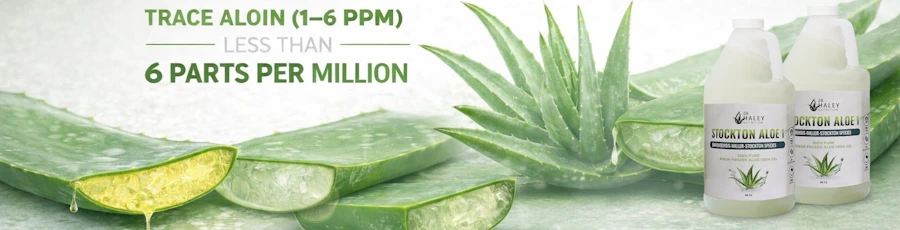
High-quality inner leaf aloe products typically contain very small trace amounts of aloin. Aloe #1® contains around 1–6 parts per million, which is comparable to many other inner-leaf aloe products on the market.
However, individuals who are extremely sensitive to latex or aloe compounds may still wish to avoid aloe products or perform a small skin test first.
Most reputable inner-leaf aloe vera products are made from properly processed inner-leaf aloe vera. The final product contains only trace amounts of aloin, typically around 1–10 parts per million (PPM). These levels of aloe latex are extremely small quantities and is comparable to many inner-leaf aloe products available today.
What Is Aloe Latex?
An Aloe vera leaf has three main layers:
- Outer green rind – the protective leaf surface
- Yellow latex layer – the part containing the bitter sap just beneath the rind
- Clear inner gel – the soothing inner leaf commonly used in drinks and skin products
The yellow latex layer contains compounds called anthraquinones, including aloin.
Unlike most plants, in aloe vera discussions, the terms “latex” and “sap” are often used interchangeably to describe this yellow substance in the outer leaf.
How Much Aloe Latex Is in Aloe Vera Drinks?
The amount depends on how the aloe is processed.

Most inner-leaf aloe products remove the majority of the latex layer but may still contain tiny residual amounts of aloin. The International Aloe Science Council has recommended keeping this below 10 Parts Per Million.
For example:
- Aloe #1 Aloe vera Health Drink contains about 1–6 parts per million (PPM) of aloin
- Whole-leaf aloe products typically contain higher levels
Under 10 PPM is generally considered trace levels.
The goal of careful processing is to keep the beneficial polysaccharides in the inner gel while minimizing the bitter latex components.
Is Aloe Latex the Same as a Rubber Latex Allergy?
No.
The latex in aloe vera is not the same as the latex found in rubber tree products such as gloves or balloons.
They come from completely different plants and contain different compounds.
However, some people who are highly sensitive to plant compounds or latex-like substances may still prefer to be cautious.
If you know you are extremely sensitive, you may want to avoid aloe products or test them carefully first.
When Should Someone Avoid Aloe Latex?
Although trace amounts of aloe latex are common in many aloe products, some people may prefer to avoid them completely.
You may want to use caution if you:
- Have a known sensitivity to aloe
- Have a history of severe plant allergies
- React strongly to very small amounts of compounds
In these cases, testing the product on a small patch of skin may be a prudent first step.
How to Perform a Simple Skin Allergy Test
If you are unsure how your body will react to aloe, you can perform a simple patch test.
- Apply a small amount of aloe to a small area of skin
- Wash the area immediately if any irritation occurs
- Otherwise, wait 15–30 minutes and observe for redness or signs of irritation
This can help determine whether your skin tolerates the product.
You can find a full guide here:
➡ DIY Skin Allergy Testing:
https://haleynutrition.com/skin-allergy-testing/
Why Aloe Processing Matters
The quality of aloe products depends heavily on how the leaves are processed.
Careful processing helps:
- Preserve beneficial acemannan and polysaccharides
- Reduce bitter latex compounds like aloin
- Maintain a product that reflects the natural properties of the aloe plant
This balance is what allows aloe products to provide the benefits of the inner gel while keeping latex components extremely low.
The Bottom Line
Aloe latex is the yellow sap found in the outer layer of the aloe leaf, and it contains compounds such as aloin.
High-quality inner leaf aloe products usually contain very small trace levels of aloin — often around 1–6 PPM.
For most people, this amount is minimal.
However, individuals with extreme sensitivities to plant compounds or latex-like substances may wish to test aloe products carefully or avoid them altogether.
When in doubt, performing a simple skin patch test can help determine how your body reacts.