
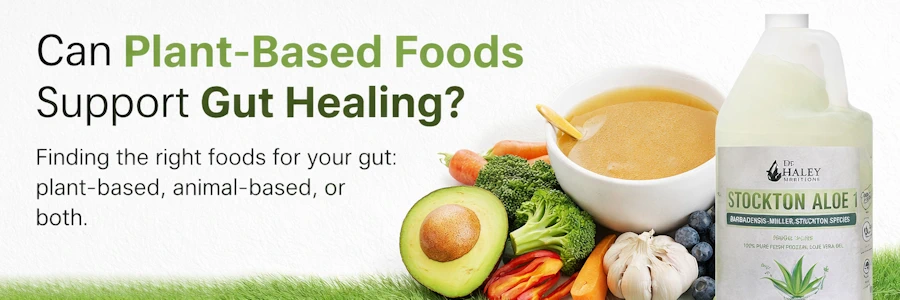
Short Answer
Yes—plant-based foods can support gut healing by providing fiber, polyphenols, and nutrients that nourish beneficial gut bacteria and reduce inflammation. However, not everyone responds the same way, and some individuals may heal better with a combination of plant and animal-based foods.
“The most effective gut healing approach depends on the individual, but the table below compares the most commonly used strategies.”
| Approach | How It Helps the Gut | Best For | Potential Downsides |
|---|---|---|---|
| Plant-Based Foods | Feed beneficial bacteria, reduce inflammation, provide fiber and antioxidants | Supporting microbiome balance and long-term gut health | Can cause bloating or irritation in sensitive individuals |
| Aloe Vera Gel | Soothes the digestive tract and supports gut comfort | People looking for gentle digestive support | Must be high-quality and properly processed |
| Bone Broth / Stock | Provides collagen, gelatin, and amino acids for gut lining repair | Rebuilding and repairing damaged gut tissue | Not plant-based; not suitable for all diets |
| High-Fiber Diet | Encourages microbial diversity and regular digestion | General gut health maintenance | Too much fiber can slow healing in some cases |
| Personalized Diet Approach | Matches foods to individual digestion and tolerance | Long-term healing and symptom resolution | Requires trial, observation, or professional guidance |
Introduction
The idea that plant-based foods can heal the gut has become increasingly popular—but is it actually true?
The answer is yes… but with an important caveat:
gut healing is highly individualized.
Some people thrive on plant-heavy diets rich in fruits, vegetables, and fibers. Others experience better digestion and recovery when incorporating animal-based foods like bone broth or easily digestible proteins.
Understanding how your body responds—and learning to adjust accordingly—is the key to real, lasting gut healing.
How Plant-Based Foods Support Gut Healing
Plant-based foods can play a powerful role in restoring gut health because they provide:
1. Prebiotic Fiber (Feeds Good Bacteria)
Foods like:
- Leafy greens
- Onions and garlic
- Bananas
- Oats
contain fibers that act as fuel for beneficial gut bacteria.
A healthy microbiome produces compounds like short-chain fatty acids, which:
- Strengthen the gut lining
- Reduce inflammation
- Support immune function
2. Polyphenols (Plant Compounds That Reduce Inflammation)
Found in:
- Berries
- Olive oil
- Green tea
- Colorful vegetables
Polyphenols act as antioxidants and also help shape a healthier gut microbiome.
3. Natural Enzymes and Hydration
Raw plant foods can provide enzymes and water content that may:
- Support digestion
- Ease the burden on the digestive system
- Help move waste through the intestines
This is one reason some people include fresh aloe vera gel in their routine—many use it to gently support digestion and gut comfort.
Where Plant-Based Diets Can Fall Short
While plant foods offer many benefits, they are not universally ideal—especially for people with compromised digestion.
Some individuals experience:
- Bloating from high fiber
- Sensitivity to certain plant compounds (like lectins or FODMAPs)
- Difficulty breaking down raw vegetables
In these cases, too much plant fiber too soon can slow healing instead of supporting it.
Why Some People Do Better with Animal-Based Foods
Gut healing often requires rebuilding tissue, not just feeding bacteria.
Animal-based foods can provide key nutrients that support repair:
Bone Broth / Bone Stock
- Rich in collagen, gelatin, and amino acids
- Provides building blocks for the gut lining
- Often easier to digest than whole proteins
High-Quality Protein
- Supports tissue repair and immune function
- Helps rebuild damaged intestinal lining
For some people, combining plant nutrients + animal-based repair nutrients creates the best results.

The Real Key: Bio-Individuality
Just like some people feel better on:
- Higher fat diets
- Higher protein diets
- Higher carbohydrate diets
…the same applies to gut healing.
There is no single “perfect diet” for everyone.
What works best depends on:
- Your microbiome
- Your current gut condition
- Your digestive capacity
- Your immune system
How to Find What Works for Your Gut
Instead of following rigid diet rules, a better approach is guided experimentation.
Step 1: Simplify Your Diet
Start with:
- Easily digestible foods
- Whole, unprocessed ingredients
Step 2: Add Foods Gradually
Introduce foods one at a time and watch for:
- Bloating
- Energy changes
- Stool consistency
- Skin or immune reactions
Step 3: Support the Gut Environment
Many people include:
- Fresh plant foods for microbiome support
- Aloe vera gel to support healing and for soothe the gut
- Bone broth for structural repair nutrients
Step 4: Track Patterns
Keep a simple log of:
- What you eat
- How you feel
- Any symptoms
Patterns often appear within days to weeks.
When to Seek Professional Guidance
If symptoms are persistent or severe, working with a knowledgeable professional can make a major difference.
The most helpful practitioners for gut healing often include:
- Functional medicine practitioners
- Integrative or holistic doctors
- Clinical nutritionists
- Registered dietitians with gut health experience
They can help:
- Identify triggers
- Guide elimination and reintroduction
- Personalize your approach
A Balanced Perspective on Gut Healing
Plant-based foods can absolutely support gut healing—especially by nourishing beneficial bacteria and reducing inflammation.
But true gut repair often involves a combination of strategies, including:
- Feeding the microbiome
- Reducing irritation
- Rebuilding the gut lining
For many people, that means using both:
- Plant-based foods for support
- Nutrient-dense foods (including animal-based options) for repair
Bottom Line
There is no one-size-fits-all solution for gut healing.
Plant-based foods can be incredibly beneficial—but the most important factor is finding what works for your body.
The most successful approach is:
- Flexible
- Observational
- Personalized
And often, the best results come from combining the right foods with the right guidance.
FAQ
Can plant-based diets heal the gut?
Plant-based diets can support gut healing by feeding beneficial bacteria and reducing inflammation, but they may not be sufficient for everyone.
Why do some people feel worse on plant-based diets?
Some individuals have difficulty digesting fiber or certain plant compounds, which can lead to bloating or irritation.
Is aloe vera good for gut health?
Many people use aloe vera gel to support digestion and gut comfort due to its soothing properties.
Does bone broth help gut healing?
Bone broth provides collagen and amino acids that may help support the repair of the gut lining.