
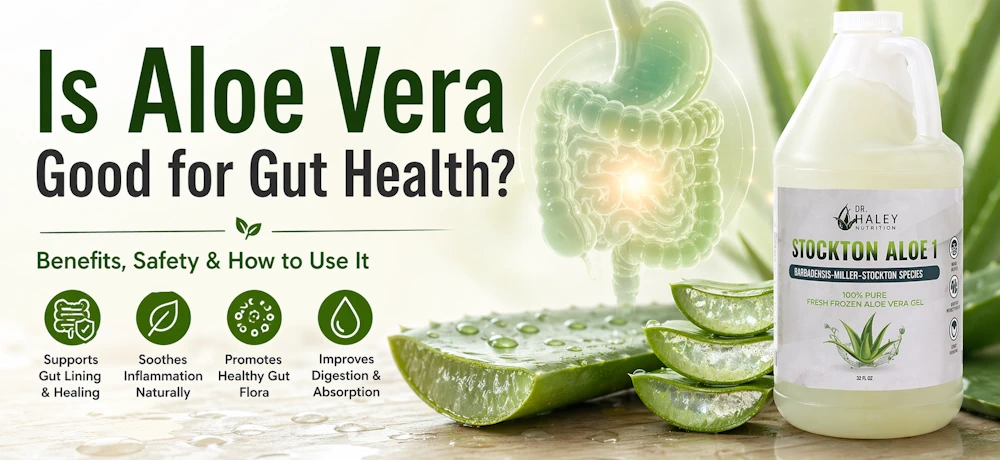
Aloe vera is good for gut health when you use inner leaf gel, which may help support the intestinal lining, reduce inflammation, and promote a healthier microbiome.
Quick Answer
Yes—inner leaf aloe vera may support gut health by helping soothe inflammation, support the intestinal lining, and promote a healthier microbiome.
However, not all aloe is the same.
Whole leaf aloe can act as a harsh laxative due to aloin, while inner leaf aloe is used for daily gut support.
👉 If your goal is healing—not irritation—inner leaf aloe vera is the correct choice.
Make This Decision First
Many people searching for aloe vera for gut health are actually trying to support issues like leaky gut, inflammation, or digestion.
| Feature | Inner Leaf Aloe | Whole Leaf Aloe |
|---|---|---|
| Purpose | Gut support | Laxative |
| Aloin content | Very low | Higher |
| Daily use | Yes | No |
| Effect on gut | Soothing | Irritating |
| Best for | Healing | Short-term relief |
Before looking at benefits, you need to decide:
- Do you want a laxative effect? → Whole leaf aloe (short-term use only)
- Do you want gut support and healing? → Inner leaf aloe (daily use)
Most people looking to improve gut health, reduce inflammation, or support conditions like IBS or leaky gut should avoid whole leaf aloe and use inner leaf only.
For a deeper breakdown, see our guide on what is the best aloe vera to drink.
Before You Begin: Inner Leaf vs Whole Leaf Aloe Vera
Not all aloe vera is safe or beneficial for gut health—choosing the right type is critical. This is the most important distinction most people miss. Based on how aloe is processed and used in real-world applications, the difference between inner leaf and whole leaf is one of the most important factors in determining results.
Whole Leaf Aloe Vera (Use With Caution)
Whole leaf aloe includes the outer leaf sap (latex), which contains compounds like aloin.
- Yellow-brown, extremely bitter sap
- Strong laxative effect
- Typically used for short-term bowel stimulation
Recommended use (if used at all):
- ~1 tablespoon, 1–2 times per day
Important safety note:
High intake of aloin-containing compounds has been associated in animal studies with changes in intestinal cells. This is believed to be due to chronic irritation, which forces the gut to increase protective mucus production.
👉 In simple terms:
Whole leaf aloe works because it irritates the gut—which is why it must be used cautiously.
If you want a deeper understanding of how aloe latex affects the body, see our guide on “Is Aloe Latex Dangerous“
Inner Leaf Aloe Vera (Preferred for Gut Health)
Inner leaf aloe is the translucent gel from inside the leaf, with very low aloin content.
- No harsh laxative effect
- Gentle, soothing to the digestive tract
- Can be used in larger, consistent servings
This is the type used for:
- Gut healing support
- Inflammation reduction
- Microbiome balance
- Immune support
👉 This article focuses on inner leaf aloe vera, as it is the form most people should use for gut health.

Why Gut Health Matters
Many digestive and immune issues trace back to the gut.
Conditions often linked to poor gut health include:
- Acid reflux
- IBS (Irritable Bowel Syndrome)
- Crohn’s disease
- Ulcerative colitis
- Food sensitivities
- Autoimmune conditions
A common concept is “leaky gut”—where the intestinal barrier becomes more permeable than it should be.
This allows unwanted particles to pass into the bloodstream, triggering immune responses.
Who Aloe Vera May Help (and Who It Won’t)
✔ This may help you if you:
- Have digestive inflammation (IBS, Crohn’s, reflux)
- Suspect “leaky gut” or barrier dysfunction
- Want to support microbiome balance
- Are looking for a gentle, daily gut support approach
✖ This is NOT the right tool if you:
- Only want a strong laxative (use whole leaf short-term instead)
- Expect instant results without consistency
- Are using heavily processed “clear” aloe products with little active content
👉 The effectiveness of aloe vera depends more on the type and quality than anything else.
When Aloe Vera May NOT Help
- If symptoms are caused by infections or structural issues
- If using heavily processed “clear” aloe
- If expecting immediate results without consistency
How Aloe Vera May Support Gut Health
1. Supports the Gut Lining (“Leaky Gut” Support)
Inner leaf aloe contains mucopolysaccharides (such as acemannan).
These compounds may:
- Help support the integrity of the intestinal lining
- Promote repair of damaged tissue
- Support proper barrier function
👉 This is one of the main reasons people use raw inner leaf aloe vera gel for gut healing.
Why Aloe Feels Different Than Other Gut Supplements
Unlike capsules or isolated compounds, aloe vera is a whole plant gel that physically interacts with the gut lining.
Its thick, translucent gel structure may help:
- Coat and soothe irritated tissue
- Deliver bioactive compounds directly to the gut lining
- Support the body’s natural repair processes
👉 This is part of what makes aloe unique compared to powders or pills.
2. Helps Soothe Inflammation
Chronic inflammation is a major driver of digestive problems.
Inner leaf aloe may help:
- Calm irritated tissue
- Reduce inflammatory responses
- Support healing in conditions like IBS or IBD
3. Acts as a Natural Prebiotic
Aloe vera may support beneficial gut bacteria.
This means it can:
- Help nourish good bacteria
- Promote microbiome balance
- Support overall digestive function
4. May Improve Nutrient Absorption
A healthier gut lining and reduced inflammation may lead to:
- Better digestion
- Improved absorption of vitamins and minerals
- More efficient nutrient utilization
5. Supports Immune Function
A large portion of the immune system is located in the gut.
By improving gut health, aloe may:
- Help regulate immune responses
- Support resilience against illness
6. May Help Support Blood Sugar Balance
Some research suggests aloe vera may help:
- Improve insulin sensitivity
- Support healthy blood sugar levels
This is particularly relevant for people with metabolic issues.
What are the Key Takeaways about Aloe Vera for Gut Health?
| Topic | Key Takeaway |
|---|---|
| Best type for gut health | Inner leaf aloe vera |
| Avoid for daily use | Whole leaf aloe (laxative effect) |
| Main benefit | Supports gut lining and reduces inflammation |
| Key compounds | Mucopolysaccharides (acemannan) |
| Microbiome support | Acts as a prebiotic |
| Leaky gut support | Helps maintain intestinal barrier |
| Safe aloin level | Less than 10 ppm |
| Suggested intake | ~1 oz per 25 lbs body weight |
Not all aloe vera supports gut health—some forms can actually irritate the gut instead of helping it.
What to Look for in Aloe Vera for Gut Health
Not all aloe vera products provide the same benefits.
In fact, the effectiveness of aloe vera for gut health depends more on the type and how it is processed than anything else.
If your goal is to support digestion, the gut lining, or overall gut health, here’s what to look for:
- Inner leaf aloe only
This is the translucent gel from inside the leaf, without the outer leaf sap (latex) that contains aloin. - Minimal processing
Avoid heavily filtered or “clear” aloe products, which often remove much of the naturally occurring beneficial compounds. - Low aloin content (under 10 ppm)
This ensures the product is gentle on the digestive system and suitable for regular use. - A naturally translucent gel with some pulp
Real aloe vera is not perfectly clear. A slightly textured, translucent gel is a sign of minimal processing.
👉 The closer the aloe is to how it exists in nature, the more supportive it tends to be for gut health.
Recommended Serving Size
For inner leaf aloe vera with low aloin:
👉 Up to 1 ounce per day per 25 pounds of body weight
Example:
- 150 lb person → up to ~6 ounces per day
Start slow and increase gradually.
Safety & Warnings
- Pregnant women should consult a physician before use
- People on diabetes medication should monitor blood sugar
- Avoid excessive intake of whole leaf aloe
What to Expect When Using Aloe Vera for Gut Health
- Within a few days:
Some people notice improved digestion or less irritation - Within 1–2 weeks:
Reduced bloating, more comfortable digestion - Within several weeks:
Deeper improvements in gut stability and consistency
👉 Results depend on consistency, product quality, and overall diet.
If You’re Considering Aloe Vera for Gut Health
The most important step is choosing the right type.
Inner leaf aloe vera—prepared with minimal processing and low aloin—offers a very different experience than whole leaf products.
Frequently Asked Questions
Is aloe vera good for leaky gut?
Yes, inner leaf aloe may help support the gut lining and reduce inflammation associated with leaky gut.
Can aloe vera heal the gut?
Aloe may support the body’s natural healing processes, but it is not a standalone cure.
How long does aloe vera take to work?
Some people notice digestive improvements within days, while deeper benefits may take weeks.
Can aloe vera help IBS or Crohn’s?
It may help support symptom relief by reducing inflammation and soothing the gut lining.
Is it safe to drink aloe vera daily?
Inner leaf aloe vera is generally safe when low in aloin and used appropriately.
What is the best aloe vera for gut health?
Inner leaf aloe vera with minimal processing and low aloin content is typically preferred for gut support.
The benefits of aloe vera for gut health depend almost entirely on using properly prepared inner leaf gel—not whole leaf extracts.
When used consistently, high-quality inner leaf aloe may support gut lining integrity, microbiome balance, and overall digestive comfort.