
Quick Answer
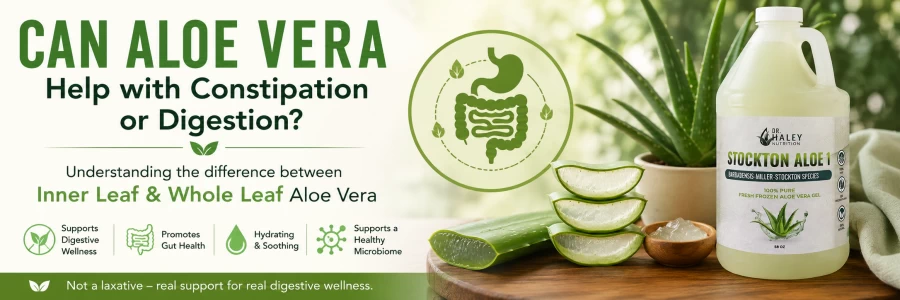
Aloe vera may support healthy digestion, but the type of aloe matters. Whole leaf aloe vera contains compounds from the outer leaf called aloin that can have a strong laxative effect. Inner leaf aloe vera is different. It is commonly used as a food-based supplement to support digestion, gut health, and overall digestive comfort without the harsh stimulant effect associated with whole leaf products.
Healthy digestion depends on many factors including diet, hydration, chewing food properly, fiber intake, beneficial gut bacteria, exercise, sleep, and stress levels. Aloe vera should not be viewed as a treatment for constipation or digestive disease, but rather as one possible part of a healthy lifestyle.
| Topic | Key Point |
|---|---|
| Inner Leaf Aloe Vera | Often used to support digestive comfort and gut health |
| Whole Leaf Aloe Vera | Contains outer leaf compounds like aloin that may act as stimulant laxatives |
| Constipation Support | Digestion may improve through hydration, fiber, and gut support rather than irritation |
| Digestive Health | Depends on diet, chewing, hydration, sleep, movement, and microbiome balance |
| Fiber | Helps feed beneficial bacteria and supports healthy bowel movement bulk |
| Probiotics | Help maintain healthy gut flora and digestive balance |
| Postbiotics | Beneficial compounds produced when gut bacteria digest food |
| Digestive Enzymes | Help break food down more efficiently, especially as we age |
| Aloe Vera Approach | Aloe is best viewed as nutritional support rather than a treatment |
Understanding the Difference Between Inner Leaf and Whole Leaf Aloe Vera
One of the biggest sources of confusion surrounding aloe vera and digestion is that not all aloe products are the same.
Whole leaf aloe vera includes compounds from the outer portion of the aloe leaf. These outer leaf compounds contain anthraquinones such as aloin, which are known for their laxative effects. Historically, some people used whole leaf aloe products specifically to stimulate bowel movements.
Inner leaf aloe vera is different. The inner gel portion contains little to no aloin when properly processed. Instead, it contains naturally occurring compounds such as polysaccharides and mucopolysaccharides that are commonly associated with soothing and moisturizing properties.
This distinction matters because many people searching for digestive support are not necessarily looking for a harsh laxative effect.
How Whole Leaf Aloe Vera May Affect Constipation
Whole leaf aloe vera may stimulate bowel movements because the outer leaf compounds can irritate the intestines and increase intestinal contractions.
This is why aloe latex and whole leaf aloe products have historically been associated with constipation relief. However, relying on stimulant laxatives regularly may not address the root causes of poor digestion or constipation.
Some researchers believe the laxative effect may partly result from the body attempting to eliminate irritating compounds quickly.
Research involving excessive intake of certain outer leaf aloe extracts in animals has also raised safety concerns regarding intestinal irritation and adaptive changes in the gut lining. Because of this, many people prefer inner leaf aloe vera products that minimize outer leaf compounds like aloin.
Inner Leaf Aloe Vera and Digestive Support
Many people use inner leaf aloe vera differently than whole leaf products.
Rather than acting as a strong stimulant laxative, inner leaf aloe vera is often consumed as a food-based supplement intended to support overall digestive wellness.
Interestingly, some people report that inner leaf aloe seems to help digestion feel “more normal” regardless of whether their digestive system tends toward looseness or sluggishness. This may relate to aloe’s soothing properties and its interaction with hydration, the microbiome, and the digestive environment itself.
Inner leaf aloe vera also contains naturally occurring mucopolysaccharides — slippery, gel-like compounds that may help support the lining of the digestive tract.
Digestion Starts in the Mouth
Good digestion begins long before food reaches the stomach.
Chewing food thoroughly helps break food into smaller particles while mixing it with saliva produced by the parotid, submandibular, and sublingual glands. Saliva contains digestive enzymes that begin breaking down carbohydrates immediately.
Proper chewing also:
- Moistens food
- Lubricates the food bolus
- Makes swallowing easier
- Helps digestive enzymes work more effectively
Many digestive complaints may worsen simply because people eat too quickly and fail to chew thoroughly.
Why Fiber Matters for Digestion
Fiber plays several important roles in digestive health.
It can:
- Add bulk to stool
- Help support healthy bowel movement regularity
- Absorb water
- Support healthy intestinal movement
- Feed beneficial gut bacteria
Certain fibers act as prebiotics.
What Are Prebiotics?
Prebiotics are types of fiber and plant compounds that nourish beneficial bacteria already living in the gut. Instead of feeding the human body directly, prebiotics feed the microbiome.
A healthy microbiome may help support digestion, immune function, and the production of beneficial compounds inside the intestines.
The Importance of Hydration
Fiber works best when adequate water is present.
Without sufficient hydration, fiber may become dry and difficult to move through the intestines. Drinking enough water helps soften stool and supports normal digestive movement.
Hydration is one of the most overlooked factors in constipation and digestive discomfort.
Healthy Fats and Digestive Function
Healthy fats may also support digestion by helping food move more smoothly through the digestive tract.
Foods containing natural fats may help with:
- Lubrication
- Nutrient absorption
- Satiety
- Digestive comfort
Examples include olive oil, avocados, nuts, seeds, and coconut products.
Probiotics, Fermented Foods, and the Microbiome
The digestive system depends heavily on the gut microbiome — the enormous community of bacteria living inside the intestines.
What Are Probiotics?
Probiotics are beneficial microorganisms that may help support a balanced digestive environment.
Many people obtain probiotics through:
- Fermented vegetables
- Yogurt
- Kefir
- Sauerkraut
- Kimchi
- Traditional fermented foods
Before refrigeration existed, fermentation was commonly used to preserve food safely. Modern heavily processed diets may contribute to reduced microbial diversity in the gut.
What Are Postbiotics?
Postbiotics are beneficial compounds created when gut bacteria digest fiber and other nutrients.
These compounds may help support:
- The intestinal lining
- Immune function
- Digestive balance
- Communication between the gut and body
In many ways, digestion is not just about feeding ourselves — it is also about feeding the trillions of microorganisms that live within us.
Digestive Enzymes and Aging
Digestive enzymes help break food into nutrients the body can absorb.
As people age, digestive enzyme production may naturally decline. Saliva production and digestive efficiency may also decrease over time.
Some people find additional digestive enzymes helpful for supporting digestion, especially when eating larger or harder-to-digest meals.
Aloe Vera Is Not a Cure-All
Aloe vera should not be viewed as a drug or miracle cure for digestive conditions.
Digestive health is influenced by many factors including:
- Diet
- Fiber intake
- Hydration
- Sleep
- Exercise
- Stress levels
- Microbiome balance
- Food quality
Many people find the best digestive improvements come not from a single supplement, but from improving their overall dietary pattern. A more natural, fiber-rich dietary approach may help support the microbiome, digestion, and immune function together. Our article on plant-based gut healing explores this topic further.
Including raw inner leaf aloe vera as part of a healthy lifestyle may support digestive wellness for some people, but long-term digestive problems should always be evaluated appropriately.
Frequently Asked Questions
Can aloe vera help with constipation?
Aloe vera can affect constipation differently depending on the part of the plant used. Whole leaf aloe vera contains the outer leaf aloe latex with it’s compounds such as aloin, which may have a stimulant laxative effect. However, this is different from inner leaf aloe vera gel, which is typically used to support digestion and gut health rather than force a bowel movement.
For constipation, it is also important to look at the bigger picture: hydration, fiber, chewing, healthy fats, movement, stress, sleep, and overall diet quality. Aloe vera should not be used as a drug or relied on as the only answer for constipation.
What is the difference between inner leaf and whole leaf aloe vera?
Inner leaf aloe vera comes from the gel-like center of the aloe leaf. When properly prepared, it contains very little of the outer leaf compounds associated with harsh laxative effects.
Whole leaf aloe vera includes more of the outer leaf material. This outer portion contains aloe latex compounds, including aloin, which may stimulate the intestines and cause a laxative effect. The National Institute of Environmental Health Sciences notes that aloin is an anthraquinone found in aloe latex and may give aloe its laxative qualities.
Is whole leaf aloe vera safe to use for constipation?
Whole leaf aloe vera and aloe latex should be approached with caution. Aloe latex can act as a laxative, but it may also cause stomach cramps and loose stools.
The FDA required oral over-the-counter aloe laxative products to be removed from the U.S. market or reformulated in 2002 because manufacturers did not provide the necessary safety data.
Why do some people prefer inner leaf aloe vera for digestion?
Many people prefer inner leaf aloe vera because it is not intended to work by irritating the intestines. Instead, inner leaf aloe vera is used as a food-based digestive support. It contains naturally slippery, gel-like compounds known as polysaccharides and mucopolysaccharides that may help support digestive comfort.
For people looking to support digestion gently, inner leaf aloe vera is usually a better fit than whole leaf aloe products designed around laxative activity.
Can aloe vera support general digestion?
Inner leaf aloe vera may be used as part of a healthy lifestyle to support digestion, but it should not be viewed as a cure or treatment for digestive disease. Healthy digestion depends on many habits working together, including chewing food thoroughly, eating enough fiber, drinking enough water, supporting the microbiome, getting adequate rest, managing stress, and moving the body regularly.
What are prebiotics?
Prebiotics are fibers and plant compounds that feed beneficial bacteria in the gut. Instead of being digested directly by the body, prebiotics nourish the microbiome and help support a healthier digestive environment.
What are probiotics?
Probiotics are beneficial microorganisms that help support a balanced gut environment. They may come from supplements or from fermented foods such as yogurt, kefir, sauerkraut, kimchi, and other traditionally fermented foods.
What are postbiotics?
Postbiotics are beneficial compounds produced when gut bacteria digest fiber and other nutrients. These compounds may help support the intestinal lining, immune function, and overall digestive balance.
Should aloe vera be used as a laxative?
Aloe vera should not be used casually as a laxative, especially whole leaf aloe or aloe latex products. These may cause irritation, cramping, diarrhea, or other unwanted effects. Inner leaf aloe vera is better understood as digestive support rather than a stimulant laxative.
Learn More About Aloe Vera
If you still have questions about aloe vera, digestion, storage, safety, or usage, visit our complete Aloe Vera FAQ page.
References & Educational Resources
- National Institute of Environmental Health Sciences — Aloe Vera and Aloin
- Mayo Clinic — Aloe Vera Overview
- FDA historical information regarding stimulant laxative products containing aloe latex