
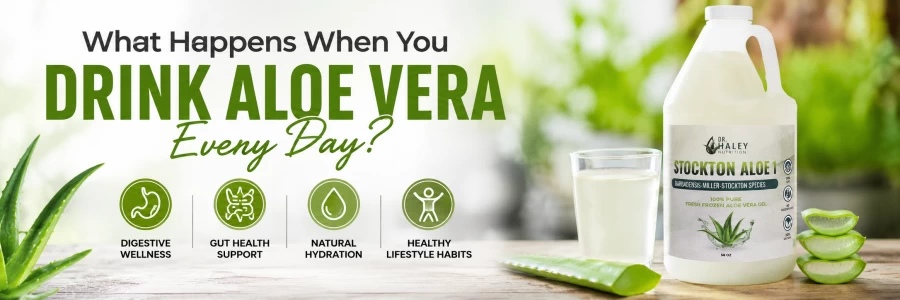
Quick Answer
When people drink inner-leaf aloe vera every day, many report improvements in digestive comfort, hydration support, and overall wellness habits. However, the type of aloe vera matters greatly. Properly prepared inner-leaf aloe vera is very different from whole-leaf aloe products that contain latex compounds associated with strong laxative effects and digestive irritation.
Why Do People Drink Aloe Vera Every Day?
Most people do not drink aloe vera every day because it tastes amazing…
In fact, many people would describe raw aloe vera as unusual, mildly bitter, or simply something they consume because they believe it supports their health goals.
That matters.
People who are willing to drink aloe vera daily are often people who are also willing to:
- eat healthier foods,
- avoid excessive processed foods,
- exercise regularly,
- prioritize sleep,
- stay hydrated,
- and maintain other difficult healthy habits consistently.
In many cases, aloe vera is not the only healthy habit changing someone’s life. Instead, it becomes part of a broader lifestyle focused on long-term wellness.
This may help explain why people who consistently consume aloe vera often also become more intentional about gut health, nutrition, and overall self-care.
What Some People Notice When Drinking Aloe Vera Daily
Digestive Comfort and Gut Support
One of the most common reasons people drink aloe vera daily is to support digestive wellness.
Inner-leaf aloe vera contains naturally occurring polysaccharides and plant compounds that many people find soothing to the digestive tract. Some people report:
- less digestive discomfort,
- improved gut regularity,
- and a calmer digestive experience overall.
Because gut discomfort often motivates people to improve other habits as well, aloe vera may indirectly encourage additional gut-supportive behaviors such as:
- eating fewer processed foods,
- consuming more fermented foods,
- taking probiotics,
- and paying closer attention to how foods affect digestion.
For many people, aloe vera becomes part of a larger “gut health lifestyle.”
Hydration and Electrolyte Support
Aloe vera is not consumed primarily as a source of water. What makes aloe vera interesting from a hydration standpoint is that it naturally contains electrolyte minerals such as:
- potassium,
- magnesium,
- calcium,
- and sodium.
The amount retained can vary depending on how aloe is processed, which is one reason minimally processed aloe products may differ from heavily filtered aloe drinks. These minerals help support normal fluid balance and hydration processes within the body.
At the same time, the type of aloe vera matters tremendously.
Properly prepared inner-leaf aloe vera may support hydration, while whole-leaf aloe products containing latex compounds may actually have the opposite effect by causing diarrhea and fluid loss in some individuals.
The Most Important Factor: Inner-Leaf vs Whole-Leaf Aloe Vera
This is one of the most important concepts people should understand before drinking aloe vera regularly.
Inner-Leaf Aloe Vera
Inner-leaf aloe vera comes from the translucent gel found inside the aloe leaf after the outer rind and latex components are removed.
This is the form most commonly used for:
- digestive wellness support,
- nutritional supplementation,
- hydration support,
- and long-term daily use.
Properly prepared inner-leaf aloe vera is generally much more gentle and even calming on the digestive tract.
Whole-Leaf Aloe Vera
Whole-leaf aloe products include more of the outer portions of the leaf and may contain anthraquinones such as:
- aloin,
- aloe latex,
- and emodin-related compounds.
These compounds are associated with strong laxative effects.
Some people intentionally use whole-leaf aloe products for bowel stimulation, but they are very different from inner-leaf aloe products designed for nutritional support.
In larger amounts, whole-leaf aloe may cause:
- cramping,
- diarrhea,
- dehydration,
- and digestive irritation.
Long-term use of irritating outer-leaf compounds may also present concerns.
Some toxicology research involving purified outer-leaf compounds such as emodin and concentrated extracts has raised questions regarding long-term digestive irritation and abnormal cellular changes in animals. These studies did not evaluate properly prepared inner-leaf aloe gel consumed as a food.
| Topic | Key Takeaway |
|---|---|
| Daily Aloe Vera Use | Many people drink inner-leaf aloe vera daily as part of a broader wellness lifestyle. |
| Hydration | Aloe vera naturally contains electrolyte minerals such as potassium and magnesium. |
| Gut Health | Some people report improved digestive comfort and greater focus on gut-friendly habits. |
| Inner-Leaf vs Whole-Leaf | Inner-leaf aloe vera is very different from whole-leaf aloe products containing latex compounds. |
| Whole-Leaf Concerns | Whole-leaf aloe may cause diarrhea, dehydration, and digestive irritation in some people. |
| Detox Claims | Aloe vera may support a healthy lifestyle, while the body’s detoxification systems perform the actual detoxification processes. |
| Daily Amounts | Some people consume 6-8 ounces daily, while others drink much larger amounts of inner-leaf aloe vera. |
Does Aloe Vera “Detox” the Body?
People often describe aloe vera as a “detox” food, but that word can sometimes create confusion.
Your body already has sophisticated detoxification systems including:
- the liver,
- kidneys,
- digestive tract,
- lungs,
- and skin.
A healthier and more accurate way to think about aloe vera is that it may support a lifestyle associated with normal detoxification processes rather than “detoxifying” the body directly.
For example, people who drink aloe vera daily are often also:
- improving their diet,
- reducing processed foods,
- increasing hydration,
- supporting gut health,
- exercising,
- and making other choices that support normal body function.
In that sense, aloe vera may become part of a broader wellness lifestyle that supports the body’s natural systems.
How Much Aloe Vera Do People Commonly Drink?
Amounts vary considerably depending on the individual and the type of aloe vera being used.
Research has shown benefit with amounts as small as 1 ounce daily. Among our customers, consumption varies considerably. Some drink 6–8 ounces daily, while others consume larger amounts depending on their goals, body size, and individual response.
Many aloe vera users commonly consume:
- 6-8 ounces daily,
while some consume significantly more.
Some long-term aloe vera users drink as much as 24 ounces daily of properly prepared inner-leaf aloe vera products. This practice is often part of a commitment they make to themselves such as part of a 1 week liquid diet or while under the care of an alternative healthcare provider during a health crisis.
However, there is likely a point of diminishing returns where consuming more aloe does not necessarily provide proportionally greater benefits.
Fortunately, properly prepared inner-leaf aloe vera is generally well tolerated by most people, even in larger amounts.
That said, some individuals may still experience symptoms such as:
- digestive upset,
- loose stools,
- or discomfort,
particularly if they: - have unusual sensitivities,
- are not accustomed to fiber-rich foods,
- or are consuming products containing outer-leaf compounds.
Whole-leaf aloe products are far more likely to cause problems when consumed in large quantities.
Fortunately there is a guide to help people determine “How Much Aloe Vera Should I Drink?”
What Time of Day Do People Drink Aloe Vera?
People consume aloe vera at many different times of day, including:
- first thing in the morning,
- before meals,
- with meals,
- or blended into smoothies and juices.
There is probably no universally “perfect” time to drink aloe vera.
Consistency may matter more than timing.
Quality Matters More Than Most People Realize
Not all aloe vera products are processed the same way.
Some products are:
- heavily filtered,
- heat processed,
- diluted,
- or made from powders and concentrates.
Others are minimally processed and retain more of the natural inner-leaf material.
Interestingly, aloe vera that appears completely clear and watery is often more processed than aloe vera that remains naturally translucent with visible plant material still present.
The more natural appearance of minimally processed aloe vera may reflect the retention of naturally occurring compounds and polysaccharides that are often damaged or removed during aggressive filtering and processing.
A Balanced Perspective on Drinking Aloe Vera Every Day
For many people, drinking aloe vera daily becomes less about chasing a miracle cure and more about supporting long-term healthy habits.
Inner-leaf aloe vera may support:
- digestive wellness,
- hydration,
- gut health awareness,
- and consistency in healthy routines.
But aloe vera works best when viewed as part of a larger lifestyle focused on:
- nutrition,
- sleep,
- movement,
- stress management,
- and overall wellness.
Perhaps the most important lesson is this:
The type of aloe vera matters.
Properly prepared inner-leaf aloe vera is very different from whole-leaf aloe products that contain higher amounts of irritating outer-leaf compounds.
Understanding that distinction may dramatically change someone’s experience with aloe vera.
Frequently Asked Questions
Can you drink aloe vera every day?
Many people consume properly prepared inner-leaf aloe vera daily as part of a wellness routine. The type and quality of aloe vera matter greatly.
Is aloe vera good for gut health?
Many people use inner-leaf aloe vera to support digestive comfort and gut wellness as part of a broader healthy lifestyle.
Should aloe vera make you poop?
Not necessarily. Strong laxative effects are more commonly associated with whole-leaf aloe products and aloe latex compounds.
Does aloe vera detox the body?
Aloe vera does not “detox” the body directly, but many people use it as part of a lifestyle that supports the body’s natural detoxification systems.
Find more in our Aloe Vera Frequently Asked Questions.